
Food for Sensitive Cats - How to Choose the Right Cat Food
Not all cats respond to changes, stress or environmental factors in the same way. Some cats are resilient and adapt easily, while others are more sensitive. For these cats, choosing the right diet can play an important role in their everyday well-being.
A sensitive cat may respond to stress, changes in its routine or other environmental factors with changes in digestion, skin condition or coat appearance. When choosing food for a sensitive cat, it is therefore important to consider not only its age and activity level but also its individual needs.
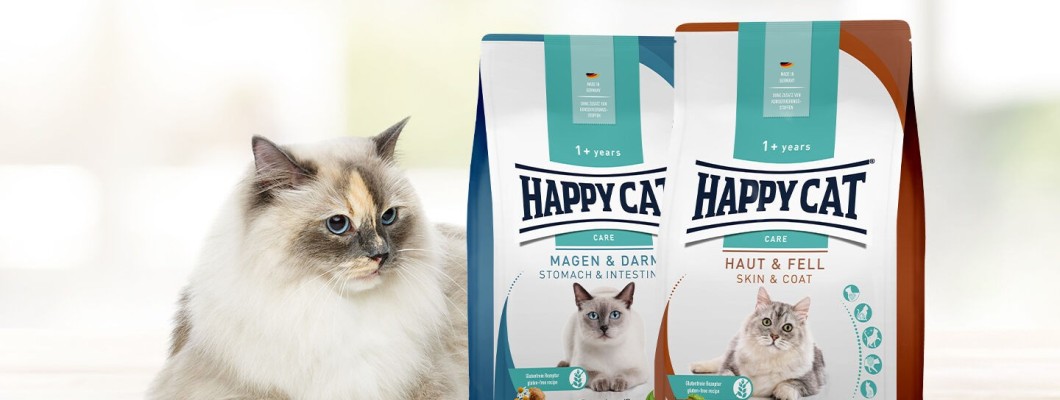
The Happy Cat Care range offers nutritional solutions for different dietary needs, from supporting skin and coat health to helping maintain digestive and urinary tract health.
How Can You Tell If Your Cat Needs Specialised Food?
A cat's body may respond to stress, changes or other factors in different ways. Some signs are easy to notice, while others may be much more subtle.
Pay attention if your cat has:
- A dry, dull or rough-looking coat
- Dandruff or flaky skin
- Increased hair shedding
- A sensitive stomach or digestive issues
- A tendency to gain excess weight
- Urinary tract problems
- A condition that requires a specially adapted diet
These signs do not necessarily mean that food is the cause. If your cat's health changes or symptoms persist, consult a veterinarian.
1. Your Cat Has Dandruff, Dry Skin or a Dull Coat
A healthy cat usually has a smooth, shiny and well-groomed coat. If the coat becomes dry, rough or dull, or flakes appear on the skin, it may be worth reviewing your cat's grooming routine and diet.
The skin and coat can require extra nutritional support during shedding season. Cats also swallow more loose hair while grooming, and the body needs a range of nutrients to maintain healthy skin and coat condition.
Older cats and cats carrying excess weight may find it harder to groom themselves thoroughly. As a result, their coats can become dull and dandruff may appear.
If you are looking for cat food to support skin and coat health, Happy Cat Sensitive Haut & Fell is designed for cats that may benefit from additional nutritional support for their skin and coat.
Omega-3 and omega-6 fatty acids, together with nutrients such as vitamin A, B vitamins, biotin and zinc, help provide nutritional support for healthy skin and a well-maintained coat.
Explore Happy Cat Sensitive Haut & Fell to find a suitable nutritional option for your cat's skin and coat needs.
2. Your Cat Has a Sensitive Stomach or Digestive Issues
The digestive system plays an important role in a cat's overall well-being. Cats that are sensitive to stress, changes in routine or other factors may experience digestive upset.
During shedding season, cats may also swallow larger amounts of loose hair, particularly long-haired cats.
For cats with sensitive digestion, it is important to choose food that is easy to digest and suited to their individual needs.
Happy Cat Sensitive Magen & Darm is formulated for adult cats with sensitive digestion. It is designed to be easy to digest and suitable for cats that need a gentler diet for the stomach and intestinal tract.
Our shop also offers Happy Cat Meat in Sauce - Sensitive Magen & Darm wet food with chicken and rice. It is a complete food for adult cats with sensitive digestion and is designed to be easy to digest.
Explore Happy Cat Sensitive Magen & Darm to find a suitable food for your cat's sensitive digestive system.
3. Your Cat Is Prone to Weight Gain
Excess weight in cats can have several causes, including consuming more calories than they need, insufficient physical activity, neutering, age and other factors.
If your cat is less active or tends to gain weight, it is important to monitor both portion sizes and the energy content of its food.
Happy Cat Sensitive Adult Light is designed for adult cats that need help managing their weight. Its reduced fat content and higher fibre content help support a longer-lasting feeling of fullness.
Weight loss in cats should be gradual. If your cat is significantly overweight, consult a veterinarian to develop an appropriate feeding and weight-management plan.
Explore Happy Cat Sensitive Adult Light for adult cats prone to weight gain.
4. Your Cat Has Urinary Tract Sensitivities
Adequate fluid intake is important for urinary tract health. For cats that drink little water, it is especially important to encourage regular drinking and always provide access to fresh drinking water.
If your cat has previously experienced urinary tract problems or a veterinarian has identified a tendency to develop urinary crystals or stones, food selection requires particular care.
Your cat's diet should be tailored to its individual needs and health condition. If your cat has a diagnosed urinary tract condition or recurring urination problems, consult a veterinarian to determine the most appropriate diet.
If your cat has difficulty urinating, visits the litter box frequently or has blood in its urine, seek veterinary advice. If your cat is unable to urinate, this is an emergency and requires immediate veterinary attention.
5. Your Cat Needs Nutritional Support for Kidney Health
The kidneys are vital organs, and their health deserves particular attention, especially as cats get older.
If a veterinarian diagnoses impaired kidney function, ordinary everyday cat food may not be appropriate. In these cases, the diet needs to be tailored to the cat's individual health needs.
Always discuss dietary choices with a veterinarian if your cat has kidney problems. The veterinarian can assess your cat's condition and recommend an appropriate nutritional plan.
Does Every Sensitive Cat Need Specialised Food?
No. A sensitive cat does not necessarily have a disease or a medical diagnosis. Some cats may simply do better with easily digestible food or a diet adapted to their everyday needs.
However, veterinary advice is important if symptoms are persistent or severe. These may include repeated vomiting, diarrhoea, significant weight changes, difficulty urinating, blood in the urine or pronounced skin problems.
Frequently Asked Questions About Food for Sensitive Cats
What is the best food for a sensitive cat?
There is no single best food for every sensitive cat. The right choice depends on the individual cat's needs, including digestive sensitivity, skin and coat condition, weight, urinary tract health and kidney health.
What should I feed a cat with a sensitive stomach?
A cat with sensitive digestion may benefit from easily digestible food formulated for the stomach and intestinal tract. If digestive problems recur or are severe, consult a veterinarian first.
Why does my cat have dandruff?
Dandruff can have several causes, including dry skin, grooming difficulties, age, excess weight, dietary factors or underlying health issues. If dandruff is pronounced or occurs alongside itching, hair loss or other skin changes, have your cat examined by a veterinarian.
Can a cat with sensitive digestion eat wet food?
Yes. Wet food can form part of a cat's diet and provides additional moisture. However, the food should be selected according to the cat's individual needs and health condition.
Can I change my cat's food immediately?
It is generally best to transition gradually over several days, slowly increasing the proportion of the new food. This gives the cat's digestive system time to adjust.
Choose Food That Meets Your Cat's Individual Needs
Every cat is different. What works well for one cat may not be the best choice for another. When choosing food for a sensitive cat, consider its age, lifestyle, weight and health condition.
The Happy Cat Care range offers nutritional options for different needs, helping you find a suitable food for your cat.
Where can I buy my chosen cat food?
Online shop: Delivery within 1–2 working days to parcel lockers or your home anywhere in Latvia.
In-store: In Riga, Piņķi, Valmiera and Ogre
Check opening hours and addresses: See OUR SHOPS
If you are unsure which diet is right for your cat, consult a veterinarian or contact our team. We will be happy to help you find a suitable option for your cat.
Leave a Comment